Competitiveness, Execution, and Pennsylvania’s Growth Moment
Economic Development Reflections on the 2026-27 State Budget Proposal
February 16, 2026
By Ben Bush
As I prepared to moderate our first Regional Growth Series discussion, one reality was hard to ignore: Pennsylvania is at a pivotal moment. With a newly proposed $53.2 billion state budget, a narrowing fiscal margin, and capital moving quickly toward states that offer speed and certainty, the question facing policymakers is no longer whether growth is possible but whether the Commonwealth can execute in time to capture it.
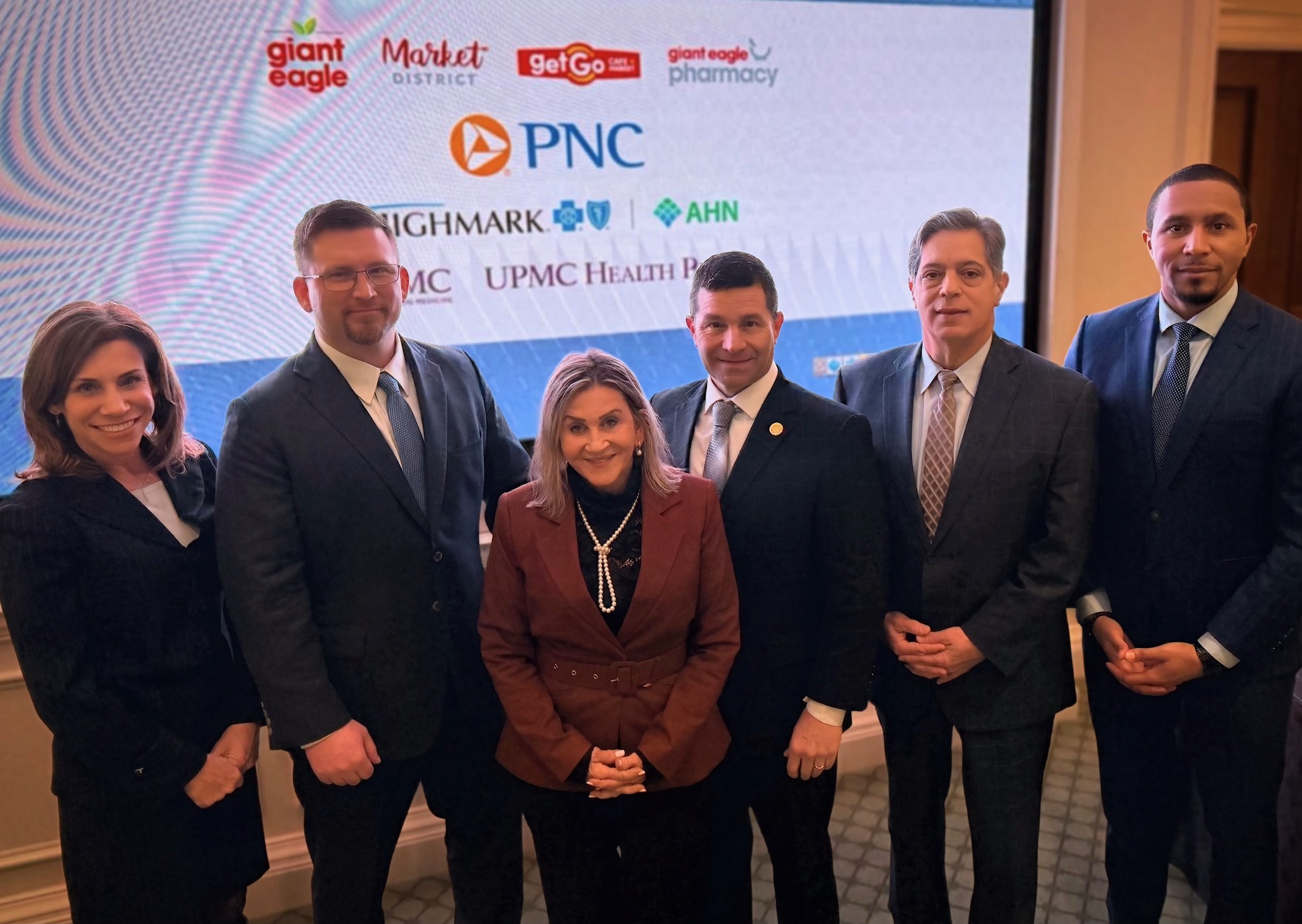
That question shaped our February 11 conversation at the Duquesne Club, where four legislative leaders joined the Allegheny Conference on Community Development for a candid discussion on what the 2026–27 budget signals about Pennsylvania’s competitiveness, priorities, and readiness to convert strengths into sustained economic growth.
This was our first Regional Growth Series event – created to provide timely insights into policy, economic, and business investment trends and issues shaping the region.
There was no better way to launch this new event series for our investors than to examine Governor Josh Shapiro’s proposed 2026–2027 state budget. I was honored to moderate this panel of elected state leaders featuring:
- Senator Kim Ward, President Pro Tempore of the Pennsylvania Senate
- Senator Jay Costa, Senate Democratic Leader Representative
- Representative Jim Struzzi, House Republican Appropriations Chair
- Representative Aerion Abney, Allegheny County Delegation Chair
The flow of the conversation closely mirrored the Allegheny Conference’s core policy priorities: pro-growth tax policy, comprehensive energy strategy, permitting modernization, infrastructure readiness, and workforce alignment.
Pro-Growth Tax Policy and Investment Signals
Bolstering state competitiveness remains the organizing framework of the proposed budget. For the Conference, tax predictability is foundational to business investment, as capital consistently flows toward jurisdictions that offer clarity and long‑term consistency. Continued reduction of the Corporate Net Income (CNI) tax rate is positioned as central to improving Pennsylvania’s attractiveness for capital-intensive investment. Our panelists each reiterated their support to continue the phasedown.
The proposed expansion of PA First, recalibration of PA EDGE, and capitalization of Innovate in PA 2.0 each reinforce Pennsylvania’s ability to compete for high-growth industries. These tools signal that the state intends to remain aggressive in attracting advanced manufacturing, life sciences, and AI-driven industries.
Energy Strategy: The Enabling Platform
Energy emerged as the clearest economic throughline of our discussion.
The Governor reiterated an “all-of-the-above” energy approach, framing grid reliability and generation capacity as economic imperatives. Panelists agreed that affordable, dependable baseload power is essential to attracting and maintaining business growth.
We know that Pennsylvania’s natural gas resources and industrial legacy provide a distinct advantage. However, as the panel emphasized, resource strength must be paired with speed and certainty. Senator Costa noted baseload retirements, interconnection delays, and slow permitting timelines as culprits affecting our state’s energy baseload.
The formula articulated during the discussion was clear: Energy + AI + Speed. Senators Costa and Ward both echoed the need for data centers to contribute to their power generation needs. This is quickly becoming a bipartisan issue to ensure energy affordability for communities and businesses.
Permitting Modernization: A Bipartisan Lever
Pennsylvania’s next growth cycle depends on pairing energy abundance with rapid execution. Emerging AI infrastructure and compute-intensive industries are make siting decisions quickly, and competitor states are shortening timelines and aligning incentives to attract business quickly.
That’s just one reason why permitting reform is emerging as an area of bipartisan alignment, driven by the need for faster timelines and clearer processes.
Panelists emphasized that faster Department of Environmental Protection (DEP) processes, reduced duplication, improved digital applications, and clearer timelines are all essential to permitting reform. Air permitting improvements already underway were cited as proof that reform is possible.
Permitting modernization remains one of the highest-impact reforms on the Conference’s agenda and will require administrative innovation more than new spending.
Innovation and Commercialization
Southwestern Pennsylvania’s research centers position our region to compete for strategic R&D and industrial policy funding.
Innovate in PA 2.0, proposed to be capitalized with $100 million, is designed to strengthen biotechnology and life sciences commercialization. Senator Costa framed innovation funding as “industrial competitiveness infrastructure” rather than discretionary spending. For the Pittsburgh region, sustained support for commercialization pipelines ensures that research breakthroughs translate into scalable companies, job creation, and follow-on capital investment.
Infrastructure and Housing Readiness
The proposed $1 billion bond to support infrastructure across energy, housing, schools, and local governments reflects recognition that infrastructure gaps constrain expansion. Housing supply constraints limit talent attraction and business expansion. Flexible tools for downtown conversions and housing development were discussed as foundational investment priorities for the state.
Representative Abney discussed the need to modernize transportation, infrastructure, and transit funding solutions while improving transit efficiency and regional workforce access. These issues are deeply interconnected and shape the conditions required for sustained economic development success.
Workforce and Education
The budget proposes to sustain investments in apprenticeships, career and technical education, internships, and employer-linked training. These align directly with the Conference’s focus on talent pipelines and industry partnerships.
However, panelists raised concerns about spending increases in education against a lack of measurable outcomes, particularly amid low testing scores, enrollment shifts, and charter school expansion – reinforcing the broader debate over how best to align investment with workforce readiness.
Fiscal Sustainability and Execution
Underlying each theme was a shared recognition that Pennsylvania’s fiscal margin is narrowing. At the same time, the proposed budget relies on revenue sources not yet enacted like the legalization of adult-use cannabis, taxation of skill games, and a proposal that the Conference does not support, combined reporting measures for corporate taxes.
While no broad‑based tax increases are proposed, reliance on unapproved revenues underscores the importance of legislative collaboration to maintain fiscal sustainability without undermining long‑term competitiveness.
Much of the budget growth is driven by mandated spending in human services, specifically Medicaid. Debate continues over the appropriate use of the state’s “Rainy Day Fund” and the long-term balance between investment and structural discipline.
A Time-Sensitive Growth Opportunity
Pennsylvania’s strengths are real: energy leadership, world-class research institutions, a growing AI and tech ecosystem, and improving business climate rankings. Unfortunately, opportunity is timebound. Capital markets and industrial investors are moving quickly.
The Regional Growth Series Budget Briefing underscored that Pennsylvania’s path forward is not ideological; it is operational. It also underscored how bipartisanship can work to move our region forward. We’re grateful to our panel for joining us to offer their insights.
The Allegheny Conference remains committed to working with state leaders to ensure Southwestern Pennsylvania and the Commonwealth compete, grow, and execute with the urgency that this moment demands.